
Diamond Education
Natural or Lab Grown.
Natural or Lab Grown.
Know Before
You Choose.
Both are real diamonds. Both are beautiful. The difference comes down to origin, rarity, and what matters most to you. Tom Van Scoy has been evaluating diamonds with a professional triplet eye loupe since 1988. Let us help you decide.
The Bottom Line
Both Are Real.
Both Are Real.
But They Are Not the Same.
A lab grown diamond and a natural diamond share the same chemical composition, the same crystal structure, and the same optical brilliance. A gemologist cannot tell them apart with the naked eye. But one formed over billions of years deep within the earth, and the other was created in weeks inside a controlled environment. That difference matters to some people enormously. To others it does not matter at all. There is no wrong answer, only the one that is right for you.
Side by Side
Natural vs Lab Grown
Natural vs Lab Grown
At a Glance
| Natural Diamond | Lab Grown Diamond | |
|---|---|---|
| Composition | 100% carbon, identical crystal structure GIA Certified |
100% carbon, identical crystal structure |
| Origin | Formed deep within the earth over billions of years | Created in a laboratory in weeks to months |
| Rarity | Finite supply. Each stone is entirely unique | Can be produced in unlimited quantities |
| Price | Higher initial investment | Typically 50-80% less than natural equivalents |
| Long-Term Value | Historically retains and appreciates in value over time | Value has declined significantly as production scales |
| Resale Market | Established secondary market for quality stones | Limited resale demand as supply increases |
| Grading | GIA, AGS and other major labs grade natural diamonds | Graded by same labs with separate report designation |
| Sentimental Story | Billions of years in the making. One of a kind. | A modern, accessible choice for the present moment |
| Environmental Impact | Mining has a land and resource footprint | No mining required, though energy-intensive to produce |
The Case for Natural
Billions of Years
Billions of Years
in the Making
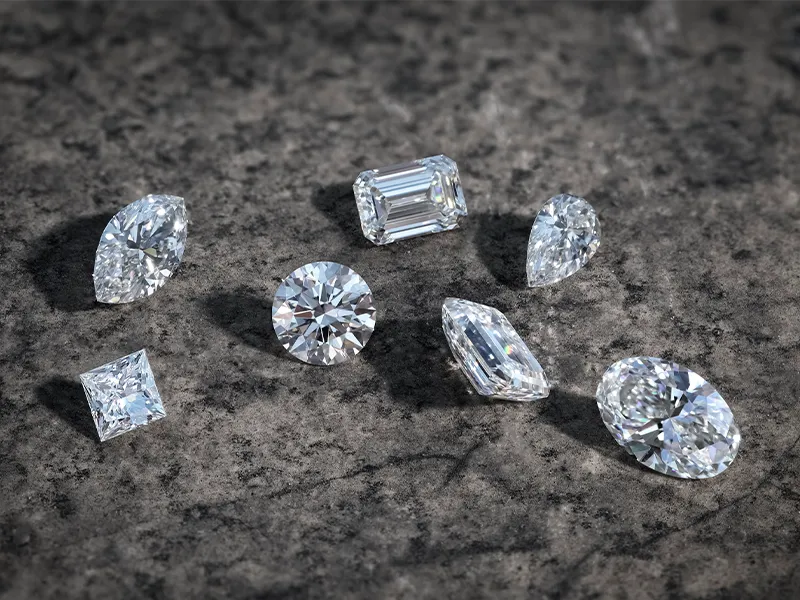
A natural diamond began forming between one and three billion years ago, roughly 100 miles beneath the earth's surface, under conditions of extraordinary heat and pressure. It was carried upward by volcanic activity, discovered, cut, and eventually made its way to you. No two natural diamonds are alike. Every inclusion, every nuance of color, every facet reflects a journey that cannot be replicated.
At Tovon & Co., Tom Van Scoy spent 18 years traveling to international diamond centers to hand-select natural stones directly at the source, bypassing multiple layers of middlemen to bring exceptional quality to Back Mountain at prices that reflect what a stone is actually worth.
The Case for Lab Grown
Real Diamond.
Real Diamond.
Modern Choice.
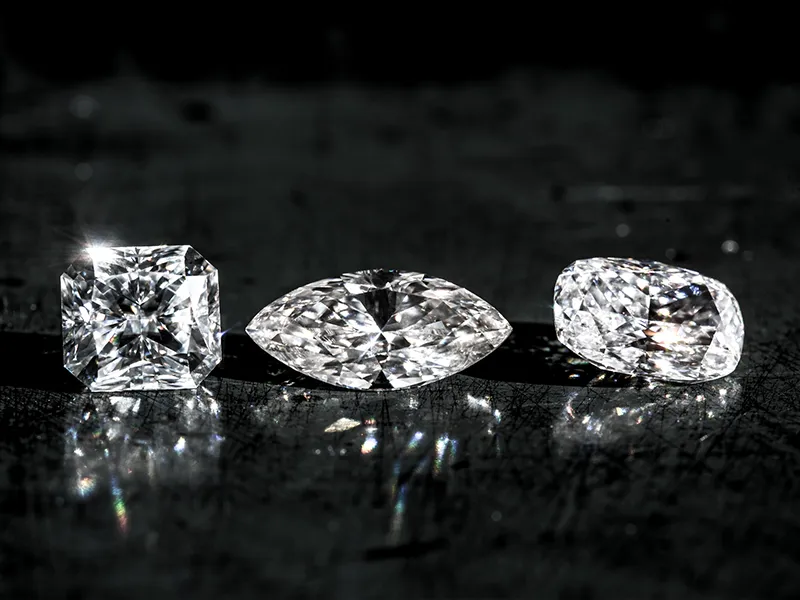
Lab grown diamonds are not simulants. They are not cubic zirconia or moissanite. They are genuine diamonds, chemically and optically identical to natural stones, created through advanced technological processes that replicate the conditions under which natural diamonds form. For buyers who prioritize size, budget, or accessibility, a lab grown diamond offers real brilliance at a significantly lower price point.
Tom Van Scoy evaluates every lab grown diamond at Tovon & Co. with the same professional triplet eye loupe and the same expert standard he applies to every natural stone in the store. If it does not meet his quality threshold, it does not make it onto the floor.
"Every jeweler buys using this eye loupe, but do they sell using this eye loupe? Tovon & Co. always does."
Whether you are evaluating a natural diamond or a lab grown stone, Tom Van Scoy hands you a professional triplet eye loupe and walks you through exactly what you are looking at. You will leave this store knowing more about diamonds than when you walked in. That education is free. It always has been.
Tom Van Scoy, GIA Certified Diamond Graduate & NYDDC Member Since 1997Common Questions
Everything You
Everything You
Need to Know
Are lab grown diamonds real diamonds?
Yes. Lab grown diamonds are real diamonds in every meaningful sense. They share the same chemical composition (pure carbon), the same crystal structure, and the same physical and optical properties as natural diamonds. The only difference is how and where they were formed. A gemologist examining a lab grown diamond and a natural diamond side by side cannot tell them apart without specialized equipment.
Do lab grown diamonds hold their value?
This is one of the most important questions to ask before purchasing. Natural diamonds have a well-established secondary market and have historically retained value over time, particularly high-quality stones. Lab grown diamonds, as production technology has scaled and supply has increased dramatically, have seen significant price declines in recent years. If long-term value retention matters to you, a natural diamond is the stronger investment.
Can you tell the difference between a natural and lab grown diamond?
Not with the naked eye, and not with a standard loupe. Both types exhibit the same brilliance, fire, and scintillation. The distinction can only be identified using advanced gemological testing equipment that detects trace elements and growth patterns. At Tovon & Co., every stone is clearly disclosed so you always know exactly what you are purchasing.
Are lab grown diamonds more ethical than natural diamonds?
It depends on your definition of ethical. Lab grown diamonds require no mining, which removes the land disturbance and community displacement concerns associated with some mining operations. However, producing lab grown diamonds is extremely energy-intensive and often relies on non-renewable energy sources. Natural diamonds sourced from certified, conflict-free channels support local economies and regulated mining communities. Tom Van Scoy sources natural diamonds from reputable, certified channels and is happy to discuss provenance in detail during your consultation.
Which should I choose for an engagement ring?
There is no universally right answer. If maximizing carat size within a budget is the priority, lab grown offers more stone for the dollar. If sentimental value, rarity, and long-term investment matter more, natural is the stronger choice. Many of Tom's customers who value the story and the permanence of a natural diamond feel strongly about the distinction. Others care most about the ring they will wear every day and appreciate what lab grown makes possible at their budget. Come in and talk it through with someone who will give you an honest opinion either way.
Does Tovon & Co. carry both natural and lab grown diamonds?
Yes. Tom Van Scoy evaluates and hand-selects both natural and lab grown diamonds with the same professional standard. Every stone in the store, regardless of origin, has been assessed using a professional triplet eye loupe by a GIA Certified Diamond Graduate with over 35 years of experience. You will never be pushed toward one or the other. You will be educated on both and make your own informed decision.